When you want the content to be good, you need to learn the best writing techniques on the Internet. By studying how to write for the SEO, you can produce quality content that creates consumer confidence with your audience, which can contribute to brand-new, loyal buyers, and sales.
In this article, we will discuss five ways of writing for the web and cover the fundamentals of online writing that will help your organization produce excellent content that will help you improve your Google ranking.
1. Know more about your audience
It is important that you consider your target before you produce any material for your web. Your audience is reading your post. You want to make sure the material resonates with them. Your main market is targeted towards consumers involved in the goods or services.
You will see who uses your resources to consider the audience’s characteristics or who sells your goods. Knowing the activities, preferences, demographic statistics, problems and more for the market is important. You know how to touch them with your material, because you know your audience. You should realize from your company what your audience needs, and build content that resonates with them.
Understanding your audience is very critical, so that you can use a language and tone that resounds with them. You want to be appropriate for and cater to the viewers. Using their words and speak sound helps you more relevant to the audience. If you choose to implement published best practices for the site, begin by defining your target market. It’ll help lead you through persuasive content development.
2. Optimize your SEO content
Some of the most important aspects of site publishing is preparing your material for SEO. If you want people to find your stuff, you need to customize it to show up on sites like Google, Yahoo, or Bing in search results.
Let’s look through several of the best practices to automate the SEO content:
Keywords:
Keywords cause the page to show up in specific search results. You want to pick long-tail keywords, including three or more phrases, to make the material shown in the search results. If writing on the Internet, you’ll want keywords to be embedded into your sites to help your readers locate your material.
Link building:
External links allow you to hold your website visitors longer, which will increase the rating of your website and enable more users to access your material. Through linking to other related pages on your website, you provide more detail to your audience and help them familiarize themselves with your brand. Use a link maker to produce quality links for your website.
3. Use plagiarism free content
As you build new sites and articles for your web, revising your articles is important. You would like to add error-prone pages on your website. Through editing your material, you’ll have clean copies for your audience.
It is important that you do not instantly edit the content after you have published it. Missing mistakes would be that the knowledge is already new on your head. Waiting for a couple of hours and uploading it, or making someone else check it for you, is safest.
Use a tool like grammar checker to help you identify and correct any spelling or grammatical mistakes if you choose to edit instantly. Although this won’t help you test the truth of your post, it will help you create a clean piece of paper.
While writing for a website, check your content for plagiarism and make sure it is plagiarism-free. Plagiarized content is very bad for your ranking. Use a plagiarism checker to check your content for plagiarism.
4. Write short but comprehensive paragraphs
Keeping the material digestible to your audience is important if you’re writing for the web. By creating a material that is dense, you will easily lose confidence in your audience. You’ll want to switch between short and long sentences while writing website material. In the most part, use simple phrases to get right to the point. This lets you dodge misleading stuff or fluff.
If the sentences are too lengthy, then you risk losing the focus of your audience. We can miss the way the sentence started or the paragraph meaning. The simple phrases are simpler to learn and comprehend. As for your articles, holding them at 2-3 sentences is easiest. If you have 6-8 sentence paragraphs, it will make your page appear daunting. Your viewer does not want to read the material because that’s going to be overwhelming.
You make the material easy to read and follow along by making short paragraphs. Your viewers can interpret the material quickly, or skim it. Formatting the material into short paragraphs provides a smoother experience for your viewers. Use a paraphrasing tool to properly paraphrase your content.
5. Use valuable content first
It is crucial that you first communicate the most valuable details while making content and writing for new sites. Your audience has a limited period of time, so they can leave your site before they read your complete post.
You’ll place the most useful and relevant knowledge first with the inverted pyramid process. Most businesses make the error of carrying their most significant argument right to the top. To hold the users on the page longer, they seek to build up excitement to their most critical level. The reality is that it does the reverse. If you’re not placing the most valuable content first, the viewers won’t be able to remain on your website. The client is less inclined to continue on your website if they are unable to access the details they need.
Let’s assume you write an article about restaurants. Talk about what the audience wants to see from the content before you launch. You want the most important details to be brought in first. In this scenario, a restaurant checklist can be given to your readers in the first part of your post, accompanied by a segment outlining what each restaurant is offering. The final section of your article could concentrate on the various services of restaurants.
When somebody didn’t have time to read the post, they might take a fast peek at the beginning of the document and scroll down to the end and leave. Such users can still return to your article for more detail. Using this approach to render writing effectively for a website is very useful. This approach should ensure that you first offer the most important knowledge to your readers, which will allow them to start reading.
Summary
It is important that you adopt best practices when developing website content for the web to help you thrive. You want to make sure you put quality content out for your audience when you are writing for a website.
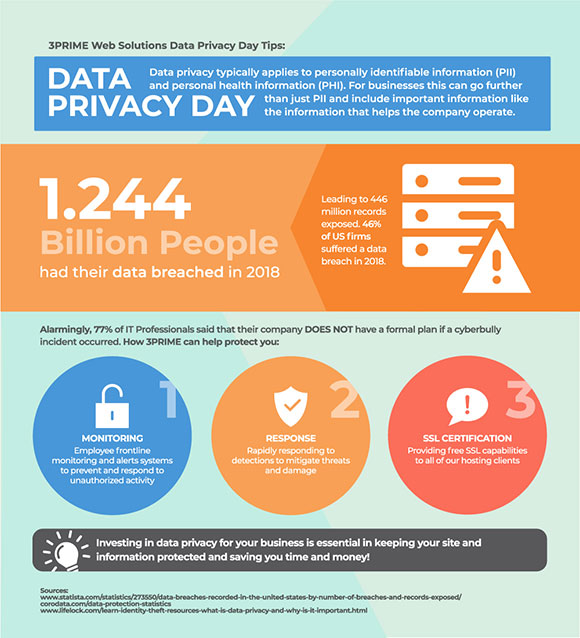
Data privacy deals with personal information that is obtained on the web, whether that is personally identifiable information (PII) or personal health information (PHI). It is a branch of data security that focuses on the way that data is handled specifically in regards to consent, notice and regulatory obligations (1).
Why is it Important?
Data Privacy has become an increasingly important issue for companies to address. Closely held company data is one of a business’ most important assets. Data is useful for mapping company performance, making decisions and solving problems faster, improving overall customer experience and measuring the success of your company (2). It provides market insight and competitive intelligence that can give it an operational advantage in its industry.
Data Breaches Have Consequences
There are a variety of ways that a data breach can affect your company negatively. The first that will come to mind to most people is the financial repercussions of the breach (4).
These financial repercussions factor in a few different ways:
reimbursing affected clients
response efforts for breach
investigating the incident.
A negative impact that is less notable, but equally devastating is the reputation damage it inflicts on your brand. Regaining customer trust is difficult after a data breach. There will likely be customers lost during that time period as people become much more reluctant to use your company (4). These effects may not be permanent, but the time and cost to repair the damage can be significant, so it is important to not overlook the reputational impact data breaches cause.
The Alarming Rate of Data Breaches
Data breaches have become fairly common in this day and age. In fact, in 2018, it was reported that approximately 1.244 billion people in the US had their data breached. These data breaches resulted in 466 million records being exposed. That year, nearly half (46%) of US firms had reported a privacy breach. And making matters worse, 77% of IT professionals said that they did not have a plan if a cybersecurity incident occurred (3)! With nearly half of firms reporting cybersecurity attacks, there must be an increased sense of urgency, seriousness & awareness given to cybersecurity. Better prevention and resolution plans to buffer attacks require such focus and resolve.
How Can You Protect Your Data?
Now that you understand the negative effects a breach can have on your company, how can you prevent them from happening?
Here are a few tips to help secure your data:
Employee Access & Education – Employees tend to be the easiest (and first) route for cybercriminals to access your data, so making sure that only authorized employees have access to crucial data is important. In addition, educating your employees about data breaches and the steps that they can take to ensure they’re only clicking on secure links and emails is critical (5).
Backup Servers – Having backup servers that can replicate your data is a good preventative measure. This will prevent large data loss that could occur from a breach (5). Ransomware attacks (where data is forcefully encrypted and held for ransom) can be alleviated when backup servers are employed.
Obtaining Data Privacy Software – There is a variety of different software, like SiteLock, that you can purchase in order to protect your site against data breaches. The software SiteLock detects and automatically removes malware and other infections. It also has the ability to increase web speed by as much as 50%.
Contact us at 3PRIME to protect your website with SiteLock!
Data Privacy isn’t just good policy, it’s brand awareness
Data privacy deals with some of the most important personal information that users can provide online. Obtaining this data is extremely useful for companies, as it factors into a variety of different things that help to improve overall customer experience, determine corporate policies, and business operations. The way this information is being stored and protected is essential for companies.
Cyber attacks that resulted in data breaches have become increasingly common, affecting nearly half of US firms. These breaches can have serious effects on a company’s operations and its brand image.
Make sure that you have preventative measures and solutions in place so that these types of data breaches don’t happen to you! A byte of prevention is worth 1.244 billion people needing a cure!
2020 has arrived, and the desire to make positive changes in order to better your site has come with it! With a new digital decade upon us, it’s time to stop and think about how you can elevate your site and your business. Here are a few site “resolutions” to consider for the upcoming year.
1. Reflect on your website and marketing communication strategy
One of the most important steps for a new year’s resolution is reflecting – the internal process of understanding your shortcomings and creating an action plan to overcome them. And it’s no different from your site! Your site is your brand, and your brand is a reflection of you. Dedicating time to reflection helps you to discover where to improve.
In other words – you need to embrace site awareness. And a good place to start is with a content audit of everything onsite and offsite.
2. Citations
Are your local SEO efforts enough to get you noticed? Citations play a key role in the labyrinth that is getting your site to the top positions in Google search. In fact, the average number of citations for a local business that is in the top 10 spots for Google is 81 (1). It is important to make sure that your citations and listings are up to date. This will also help you see if there are other places/sites that you should be placing these citations and listings. Your local structured citations can be listed via platforms like Google My Business, Facebook, Foursquare, etc. Unstructured citations are less common but still valuable and can be found in blog posts, forum threads, press mentions, etc. (2).These audits will help you see what your SEO was like the previous year and will help you set goals for your SEO moving forward!
3. Content. Content. Content!
When your audience comes to your site they are looking for one thing, relevant content, and they do not want to have to struggle to find it! This means that the content on your site needs to be clear, concise and convey a message that is contextually relevant. Your audience should be able to find the information that they are looking for fast and efficiently (3). This is essential in keeping people engaged and also in building SEO. Search engines, like Google, value high-quality content and will display those sites whose content they believe will be more valuable to searchers. So, when reviewing your content, it’s important to consider how useful, informative, valuable, credible and engaging it would be considered to users (3).
4. Make Your Site ‘Lean’
Does your site load slowly? Are there a bajillion images? Is it filled with other UI or content bloat? If it is, it sounds like your website needs a diet! Having a ‘lean’ site isn’t just good web health. It’s a business requirement. Lean sites simplify the front end framework in order to increase speed, make navigation more efficient, and get the right content in front of your audience (4). Having a faster site not only is important in your SEO rankings, it is also proven to lead to more conversions. Intuit is a good case study for this.
Intuit improved its platform performance, reducing page load time from 15 seconds to 2 seconds in the process. This profoundly increased conversions. And they broke down just how significant it was by identifying page load segments and compared them against buckets of conversion improvements.
For pageloads of 7-15 seconds, a 3% increase in conversions occurred for each second removed from load time
For pageloads of 5-7 seconds, a 2% increase in conversions occurred for each second removed from load time
For pageloads of 2-5 seconds, a 1% increase in conversions occurred for each second removed from load time
Your audience almost requires your site to be fast as a prerequisite to qualifying business. Nearly half of users (47%) expect a site to load within two seconds or less (5). These numbers are a critical reminder of how a ‘lean’ site can build your business’s overall performance muscle. Lean means green!
5. Improve User Experience (UX)
Another crucial resolution for your site in 2020 should be renewed focus on user experience. This follows from making your site lean. A lean site is a performant site, which provides a better user experience. But it’s more than just fast load times. You need to know your audience, and tailor the value proposition of your site accordingly! A site’s behavior is an extension of its value proposition.
You need to understand what your audience is looking for, what they value, and their limitations as well as their capabilities (6). Make sure it is easy for your audience to find what they are looking for. One tip is to put all relevant information in one place rather than splitting the difference. And don’t ignore navigation! You want (nay, NEED) your site to be easily navigable so that your audience can quickly and efficiently find their desired information. User Experience is a constantly refined process. You should often audit your site for its usefulness, usability, desirability, discoverability, accessibility and above all its credibility (6). Enhancing these elements of your site design could show major results in the new year!
With every new year comes a new opportunity to find areas in our personal and professional lives to improve and excel in. Your website is an integral part of your business and as such, it should be continually improved upon as well. Want better business vision in 2020? Take your site to the next level and contact us at 3PRIME to help you achieve your New Year’s Resolutions!
From the latest Google Livestream on October 16, 2019, we learned some tips in order to spruce up our holiday marketing plans. The holiday season is a great time for small businesses to attract new customers and bring back previous ones and following these tips for your businesses Google my Business can help.
1. Update Your Holiday Hours — During the holiday season the search rates for “open now” and “store hours” are at an all time high. In fact, on Christmas Eve, searches for “store hours” is the highest of the year. Updating your seasonal store hours on your Google my Business is an important tool in order to direct traffic to your store.
2. Create a Short Name — You can create a unique short name for your business. This short name will be connected to a URL link for your business, making it easier for customers to learn more about your business.
3. Add Photos (Use your Phone) — Adding media to your Google my Business listing is made easy, by using your phone to upload photos and videos. Businesses that have photos on a search results page are 90% more likely to have customers visit their business.
4. Write a Post — Creating a post for your business will make you more appealing to potential customers and helps you in Google search rankings.You can write 4 different types of post for your Google my Business page:
What’s New – Create a post about anything new going on in your business that will help customers learn more about what you offer.
Event – If your business is hosting an event, posting it on your Google my Business page is a great platform to get it out to customers.
Offer – Any current offers or promotions that would be interesting to potential consumers can be posted here.
Product – Popular or new products that your business is offering can be displayed here in order to easily show up in Google search results.
5. Set Up a Welcome Offer — When people follow your business on Google, they will see your updates, offers, and photos across Google and in their “For You” stream in Maps.
Search engines are a huge driving force behind holiday shopping, 83% of last-minute holiday shoppers use a search engine related to their shopping. It is also shown that 78% of holiday shoppers turn to online searches before visiting a store in person. Google my Business could be a huge driving source for your e-commerce this holiday season. If you are looking for any more tips or help in order to increase your Google ranking and improve SEO for the upcoming holidays, contact 3PRIME today!
Now that app developers are utilizing augmented reality and virtual reality on a more frequent basis, it is time to take a closer look at the benefits that these technologies have to offer. For example, there are a number of teachers who are now relying on these technologies in their classroom environment.
How can augmented reality and virtual reality be used in the educational field? How can app developers help teachers to get the most out of the technology? Meanwhile, there are teachers who have already met with app developers and have begun to incorporate the technology. These are not mere trends. They are not the wave of the future.
In fact, they are here to stay. That’s why this helpful guide is here to provide further background on the advantages of AR and VR in a classroom environment. Gone are the days of relying on the good old fashioned chalkboard. Teachers are now able to keep their lessons fully up to date and streamline any number of typical processes. These are just a few of the benefits that these technologies and their associated app developers have to offer.
The technology may be in its infancy but the potential is limitless. The proper care must be taken to ensure that it is being used in the correct manner. App developers offer further insight as to what the best practices are supposed to be. There are some great uses for augmented reality and virtual reality and the following guide is here to provide the necessary insights.
Increased Levels of Student Engagement
Let’s face the facts here. The average student is always going to struggle to remain engaged. It can be tough for teachers to make certain lessons come to life. This makes it more difficult for teachers to impart the information needed. Now that technology has advanced to a stage where augmented reality and virtual reality can be used, these problems are going to start to fall by the wayside.
With the help of these technologies and app developers who have their specific interests in mind, teachers can now tailor their lessons to the students in a more direct way. While there is nothing wrong with using textbooks or more traditional learning materials, a student is more likely to sit up and take notice when cutting edge technology is used.
That’s just the nature of the beast. Even a child that is not all that enthusiastic about certain subjects will be more likely to pay close attention when the lesson is presented to them in a new and exciting way.
Taking Students On More Field Trips
There is no hiding the fact that students love to go on field trips. This is one of the best parts about being a student. Thanks to augmented reality and virtual reality, students will no longer have to head home with a permission slip in hand. The school systems are no longer forced to budget for various trips. Once the upfront costs associated with app developers who work with these technologies have been paid, the students are free to go on as many field trips as necessary.
The headsets that are used come with a variety of price points, as well. This allows schools to choose the models that work best for their needs, without being forced to break the bank in the process. There are various tools (like Google Cardboard) that are also designed to make the process of implementation easier than ever before. Google Expeditions is another common tool being used in today’s schools.
Teaching Students How To Code
The days of saying “it would be nice if more students could learn how to code” are now over. With augmented reality and virtual reality apps, teachers are able to pass these lessons along far more easily than ever before. Early studies show that these platforms offer students untold advantages when it comes to learning how to code. Augmented reality platforms are believed to be especially useful.
Mobile platforms are becoming the most commonly used by students looking to learn coding. These platforms offer the sort of interactive study that other platforms simply cannot match. Studies show also show that these students are more likely to have a positive learning experience and pass all of the necessary tests when they learn on these platforms.
Assisting With Content Creation
When students are given the chance to visit various sites in their region, they are more likely to become passionate about related topics. From there, augmented reality and virtual reality can become key agents when it comes to the creation of content about these locations. Turning trips into virtual reality/augmented reality experiences is a great way to inspire students.
From there, students who are given the chance to enjoy these experiences will work harder to virtualize other sites that they have yet to learn more about. These forms of technology give students the chance to serve as the creators of their own personalized learning experience. The added engagement is one of the many benefits.
Teachers and administrators are already enjoying the various advantages. While there are some who remain skeptical, educators and researchers alike have begun to share the benefits that they are experiencing with the general public. With the help of app developers, schools are now able to modernize the learning business and give their students the opportunity to position themselves for greater levels of future success.
Author Bio:
Melissa Crooks is Content Writer who writes for Hyperlink InfoSystem, a mobile app development company in New York, USA and India that holds the best team of skilled and expert app developers. She is a versatile tech writer and loves exploring latest technology trends, entrepreneur and startup column. She also writes for top app development companies.
From the latest Google Livestream from March 6, 2019, we learned the 5 ways in which we can hit the ‘refresh’ button on our website. If you feel like your site is not getting much traffic, is not performing well or just needs an overall spring cleanup, then these 5 Google practices for refreshing your website are just for you!
Refreshing Your Site – If you do a site search of your site using site:yourdomainname, you can see which pages are showing up and which may need to be improved. Page titles should be descriptive to what the page is about without keyword stuffing. Keyword stuffing will look like spam to Google, which will hurt your site’s overall presence. You can buy a 3-hour package and get a solid refresh done for under $300. Check out CTWebDevelopment Services for more information and to order.
Creating a Sitemap – You should also create a sitemap; this will help to navigate any pages missing by Google linking them to the correct landing pages. The landing pages should be put in a standard template in the navigation. With a sitemap XML file, it will help to provide Google with enough information it needs to crawl and index pages.
Updating Image Names and Descriptions – You can further help search engines like Google by optimizing any image files and Alt text. Choose file names that fully describe the image and not vague names like ‘image1.jpg’. Alt text will help the accessibility of the site and optimized images will further help your site get noticed.
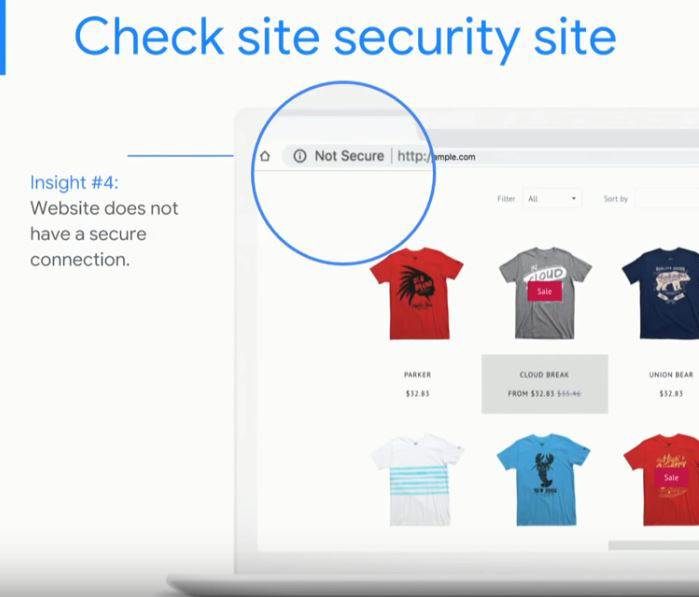
Website Security – if your site is not secured, this is an easy way to chase away website traffic. Many visitors do not want to visit a site that is not secured. In fact, 85% of consumers say that protection from malicious websites is their biggest concern when it comes to protecting their information. With Google Chrome, 3 signs are shown for site security:
Dangerous – A red triangle in the left corner means the site is in danger of releasing your personal info.
Not Secure – A ‘Not Secure’ image of an ‘i’ with a circle around it means there is not a private connection – another way data can be leaked.
Secure – Your business ultimately wants to have the gray ‘secure’ lock to protect both you and your customers. Ask your web provider to help by providing your site security.
3PRIME hosting customers get a free SSL with your hosting, so if you want a simple solution to this, check out 3PManagedHosting.com, or give us a call for assistance setting up a 3rd party SSL!
Be Mobile Friendly – Besides web security, another issue that chases visitors away is if your site is not optimized for mobile use. This will slow down the user’s speed and make it difficult to view content. Ultimately you want fast page loading speed, organized content and easy navigation. By searching for a ‘Test my site’ tool on Google, you can determine how well your site is performing on mobile devices.
By searching for a ‘Test my site’ tool on Google, you can determine how well your site is performing on mobile devices.
With these 5 tips, you are refreshing your site for better rankings on Google and better performance for potential customers. These tips will help your site to be direct with the exact content on it, so Google can easily identify and direct traffic to your landing pages. If you need help with any of these tips with from providing website security to optimizing your site for mobile use, contact 3PRIME today!
The J2SE 5.0 platform released back in the early 2000s with a purpose of adding new features to the existing Java framework. There have been multiple updates that enabled it to work based on real-world models. In addition, the testing of software running on this kit has also provided with a smoother experience. It also enables better products for businesses. Looking at the multiple improvements in the J2SE 5.0 version, you have to understand the reasons for choosing it for your business development. The following reasons should give you an idea of why to move to this environment.
Your application may already use the version 5.0
To make sure that your system works proficiently, your do not have to recompile or redesign your applications for running a new version. In fact, old applications have an algorithm that keeps them running smoothly even on newer runtime environments, such as the J2SE 5.0. Moreover, this feature also saves any extra costs that may have been subjected otherwise. One such reason behind the success of this feature is the compatibility tests that ensure the working of backward applications. Java’s test suite contains over 250,000 tests that help in keeping the Java applications up and running.
Improvement in performance
With the J2SE version 5, you can increase the performance of software for both server and the clients. The coding is smoother in this platform, which makes it run the applications at a much faster speed without interruptions or lagging. Even developers prefer it to other runtime environments because of enhanced regression properties. You may also like to learn about Runtime Polymorphism.
Manageability and monitoring
This kit offers state-of-the-art manageability and monitoring framework that is developed in the machine for the virtual environment, which is Java Virtual Platform (JVM). In fact, you can easily use the consoles for managing without changing the protocols without worrying about low conditions of memory. This feature makes it great for SNMP and JMX protocols.
New Design and Interface
Java has enhanced its design and interface features to help the user feel more connected to the framework. The Ocean interface has offered a multi-platform compatibility environment so that you can switch between the newer design and the traditional one. In addition, one can do this without the need of recompiling.
Faster in speed
J2SE 5.0 also adds more speed to the framework, thus enabling a decreased booting time. In fact, more than 30% time has been reduced when one starts the application with the newer version. JVM has also known to offer self-tuning and self-governing features on the various server-type machine, which offers more than two CPU processors connection.
Thus, Java platform with the newer version is a boon that you should grab a soon as possible. You will love the new environment that offers such impressive features for improving your business productivity. Also, keep checking for updates related to this platform so that you can keep up with the latest features and improve your performance.
Content marketing is the new kid on the block, but the strategy is making headlines across the industry because of its ability to consistently generate fantastic results for companies of all sizes. The average person consumes 11.4 pieces of content before making a purchase, which is why content marketing can have such a large impact on the purchasing decisions of consumers.
When compared to traditional advertising methods like TV, radio and even pay-per-click ads, content marketing allows you to avoid interruption. According to Vincent D’Eletto Jr from WordAgents Reviews of content marketing, “the problem with these traditional marketing methods is that you rely on interrupting the consumers day” to tell them about your product, while content marketing puts the information in front of those who are already looking for it.
Not only does this mean that you get your business in front of hot leads who are further down the sales cycle, but it also prevents you from becoming a nuisance. It’s easy for consumers to become irritated with companies that are constantly using interruption marketing, especially in the era of ad blocking; this is why many firms are switching to content marketing.
The Content Marketing Process
As with all forms of marketing, it starts with research. The marketing team needs to understand what kinds of content are hot and who is sharing them and why. Once this has been established, they can create a fantastic piece of content and publish it. But that’s not enough, the old adage “build it and they will come” isn’t accurate. In reality, you need to use tools to promote that content.
BuzzSumo
BuzzSumo is an online web application that aggregates the most popular pieces of content on the internet by looking at how many engagement signals they get on popular social media sites. This includes Facebook shares, Facebook likes, Retweets and Pinterest pins. These signals give you a good idea of what types of content are popular in a given niche.
Ahrefs
Although usually used for backlink analysis, Ahrefs allows you to enter a domain and rank their pages by the number of referring domains. Doing this shows you which pieces of content get the most links, which you can analyze along with the BuzzSumo data to better understand what you should create and why.
CoSchedule’s Headline Analyzer
The headline that you use for your content is incredibly important, especially on social media where people often share content without reading it. To create the perfect headline you should use the CoSchedule Headline Analyzer which scores your suggested title and gives you recommendations on how you can improve it.
Luxury is defined as a state of great comfort and a condition of abundance. For as long as cars have been around, the brand and model of a car has been a symbol of luxury and status. However, nowadays the car itself isn’t what makes it desirable, but rather what is inside it. According to the Director of Industry Analysis at AutoPacific, automotive technologies are becoming the new measure of quality. With so many technological improvements to a car’s capability, these applications are becoming the new thing to have. So, to flaunt your style, check out these futuristic technologies that absolutely need to be included in your next car.
Self-Parking
Although autonomous cars have not fully hit the roads, self-parking capabilities are becoming more popular. Companies such as Tesla, BMW and Mercedes all have cars that can remotely park. You simply pull up the application on your phone, and you can park your car, or remove it from a tight parking spot without ever getting in the vehicle itself.
Autonomous Safety Controls
Once restricted to high-end cars, autonomous safety controls are now offered in many affordable brands and models. Some of these controls include lane-keep assistance, automatic forward-collision breaking, and adaptive cruise control. These technologies are not only cool and futuristic but also work to keep you safe while in the driver’s seat.
Gesture Controls
Car companies such as BMW, Ford, and Volkswagen are now advertising touch screens that you don’t even have to touch. Instead of pressing a button to turn up the radio, you can now do it with a simple hand motion. This increases the amount of functions that your car can perform as it provides no limit to the number of buttons and touch-options available. It can also make your drive safer, as you don’t have to be staring at a screen to change a radio station.
Vehicle-to-Vehicle and Vehicle-to-Infrastructure Communication
Your car is becoming more human than you know. Now your car can communicate with you about your surroundings. For example, you can receive information about traffic, climate conditions, and other road conditions through your dashboard. Your car can also search through mobile apps such as HWYPro, designed by Bill Busbice Jr. This allows you to integrate all the information you need to know while going on long journeys.
Over the Air Updates
Because cars are becoming more digital, software updates are becoming very important to keep everything running. We used to have to take the car into the dealer to receive software updates or install the software through a thumb drive. However, now, some cars are allowing the ability to provide key software updates over the air. This is similar to how your mobile phone or computer receives updates and can save you time and money.
When searching for your next car, be sure to look for these technologies to ensure that you’re getting the most up-to-date and technologically advanced vehicle.
How Virtual Reality is Changing the Construction Industry
Virtual reality, for many, sounds like something from an old sci-fi movie, not something that’s becoming commonplace in modern-day businesses, but that’s exactly what’s happening and this new way of doing business is taking many industries by storm. Virtual reality is, and will soon be for most businesses, an indispensable tool that drives productivity and sales like nothing that’s ever been seen before.
What Is Virtual Reality?
Virtual reality is a computer-generated technology that provides an immersive experience using projection technology, 3D glasses, or 3D headsets to show lifelike images, sounds, and other sensations to reflect an actual presence in a virtual reality or imaginary environment. This technology will provide anyone the opportunity to see how a product or service will look and function before it has been completed.
How Is Virtual Reality Changing the Construction Industry?
Virtual reality will help construction teams with building information modeling (BIM) to see what a finished project will look like when completed. This technology works by collecting a wide range of images using 3D laser scanning and drone collected pictures to design a set of vivid, lifelike images which are then used to create three-dimensional pictures.
Other Ways Virtual Reality Is Changing the Construction Industry
Virtual reality is helpful in other ways as well. For example, making changes once a building is under construction is extremely time-consuming and expensive. But virtual reality helps correct conflicts and mistakes because using this technology allows a team to find and correct any issues for free before any type of construction has begun. It can streamline the process of building new construction by providing a concrete vision beforehand of what the end appearance will be.
The Benefits of Using Virtual Reality In Construction
The list of benefits that come from using virtual reality in construction is growing quickly as more and more uses of this technology surface.
Here are just a few of the benefits you can expect when using virtual reality in your construction business.
Faster decision making and project approvals
Increased collaboration and positive client interactions
Greater client satisfaction
More accurate projections during the course of a project
Easier visualization of future projects
Common Virtual Reality Applications in the Construction Industry
Construction can be an extremely difficult business because there are so many moving parts that need to be precisely coordinated to achieve the best possible end result. Therefore, any tool or technique that can make the process come together with the least amount of error, the highest chances of success, and the lowest possible cost, is not something that should be considered. It’s something that should be a requirement if you want to become or remain an authority in the industry.
Here are some of the most common virtual reality applications currently being used in the construction industry.
Training and virtual conferencing
VR plan reviews
Communication and improved collaboration
Leveraging specialized knowledge
Remote jobsite walks
Augmented reality worker assistants
Improving pre-production design and building processes
Finding and correcting errors and mistakes
Complete immersion to perfect the flow, workability, and proper placement of equipment or other requirements of a building
Avoiding duplication and creating shortcuts for better proficiency
What’s Ahead
Other applications on the horizon that should also be considered are augmented and mixed reality.
Augmented Reality. This is a technology that superimposes a computer image on a user’s view of something real providing them with a composite view.
Mixed Reality. This is also known as hybrid reality and is the merging of the real and virtual worlds in an effort to produce a new environment or visualizations where physical and digital objects co-exist and ultimately interact in real-time.
The Bottom Line
Virtual reality is quickly replacing the construction of scaled mock-up building models. This trend opens up so many more potential opportunities for any business who jumps on board. And with the numerous virtual reality software programs and apps surfacing, the use of this technology will continue to grow and influence the construction industry in an even bigger way.